


Connect
Make data flow across emerging computing systems and modern computing infrastructure.
Arbigen unlocks new data sources from compute, networking, and sensing systems beyond conventional computing.
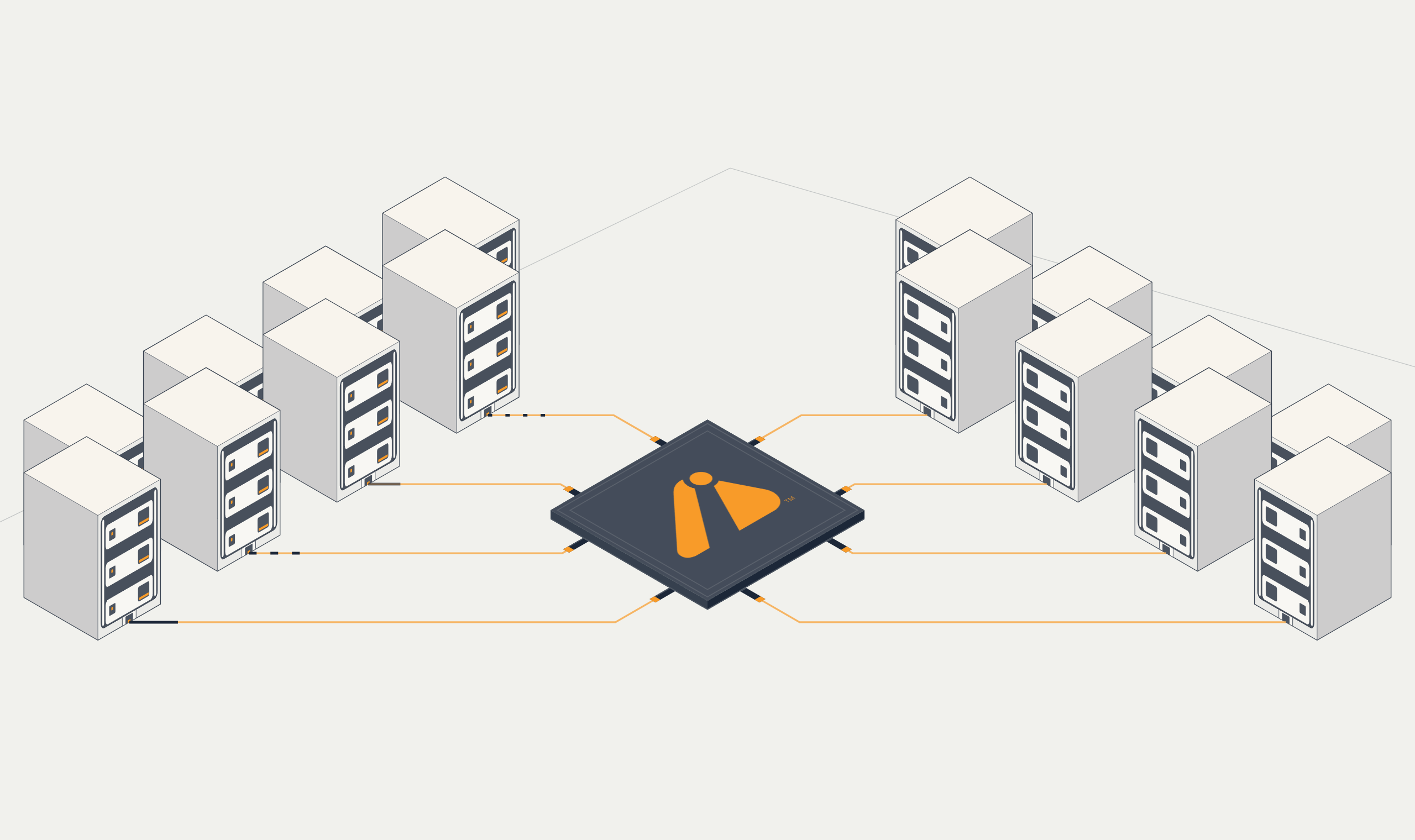
Arbigen builds data–hardware codesign infrastructure around the Arbigen Coexistence Engine™ (ACE), a shared data layer for emerging computing systems.
Make data flow across emerging computing systems and modern computing infrastructure.
Preserve modal context across supported devices, networks, and architectures.
Design data infrastructure around the physical properties and interfaces of emerging systems.
Physics-based computing systems introduce new ways to generate, represent, and process data. Making that data usable with existing high-performance computing requires infrastructure designed around both the data and the systems that produce it.
Hardware is extending computation beyond conventional digital systems.
Conventional digital computing uses physical states to encode binary values. Emerging architectures use the physical effects intrinsic to each modality to represent and process information.
Different hardware produces different data
These architectures need to exchange data and coordinate computation with classical computing systems.
New hardware remains tied to individual stacks, limiting how its capabilities and native data can be used across systems.
Arbigen bridges these gaps by developing the data layer alongside the physical systems it connects.
Arbigen’s data stack provides a common architecture for data across modalities, devices, and computing environments.
ACE is a platform for physical data streams across modal boundaries. Substrates that would otherwise require separate integrations share a uniform data model. Maintain continuous data flows across substrates and supported systems.
OCProto is the optical networking component of the ACE architecture. It provides device configuration, open optical networking, and a programming layer for optical devices and networks. It is portable across a range of electro-optic applications.
Data from different modalities and architectures is represented through a common model while retaining its modal and architectural context.
Context stays with the data as it moves across connected systems, supporting new modal networking applications.
ACE routes data across devices, networks, and computing environments while maintaining continuity across substrates and systems.

Turn physical effects into usable data sources.

Programming interfaces for modal links and networks.

An emerging asset class derived from physical systems.

Substrate and system, designed as one.
One Dataflow · One System · One Interface
Arbigen harnesses nature's data factories, turning physical phenomena into data sources.
Arbigen builds data infrastructure for emerging systems that compute, sense, and network in unconventional ways. We connect these systems with high-performance computing and the data infrastructure around it. Our software runs on optical equipment already used in data centers.
Silicon photonics lets us program the optical paths that carry data. Our optical work spans network-on-chip connections through telecom networks. Where optical links are not suitable, we are developing other modal carriers.
Our approach is data–hardware codesign. We develop software and firmware alongside the data layer, extending into devices where the system requires it. Our current work focuses on sourcing new data and evaluating modal transformation boundaries.
Computational maturity and data maturity are not the same. A substrate can become useful as a data source before its architecture is fully mature. Arbigen provides the layer that makes those sources practical to use.
Interested in what we're building? We'd like to hear from you.
